To reduce air pollution from ships, globally0.5% m/mThe standard for sulfur content in ship fuel will officially take effect on January 1, 2020. Currently, there are three main ways for ships to meet this standard:
✓Install and use low-sulfur oil
✓Uses marine desulfurization tower (exhaust gas scrubbing system)
✓Use liquefied natural gas (LNG) as an alternative fuel
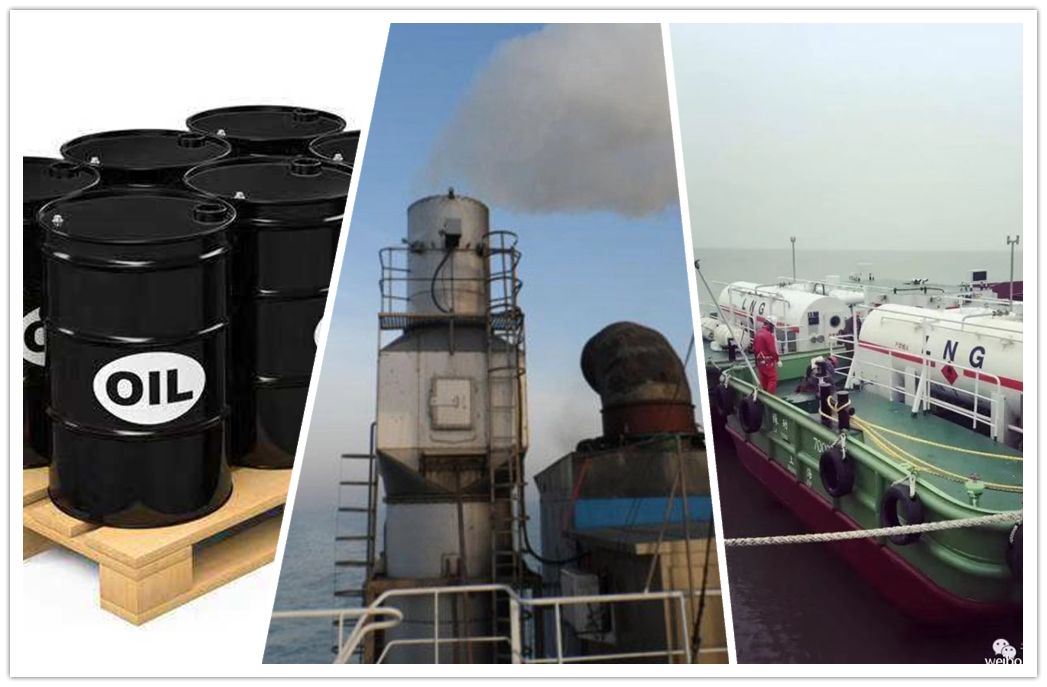
Research data shows that about 85% of ships worldwide will choose to use low-sulfur fuel to comply. In addition, some ships have decided to install scrubbers. According to Clarkson Research Services, it is predicted that inBefore 2020There will be up to10%installation of shipsDesulfurization tower, this number will increase to by the end of 202015%.
Desulfurization Tower Lifecycle
As a new thing, in order to give everyone a more intuitive understanding of the desulfurization tower, this article will collect and organize the hotspots and precautions at each stage according to the life cycle of the desulfurization tower, for the reference of relevant parties.
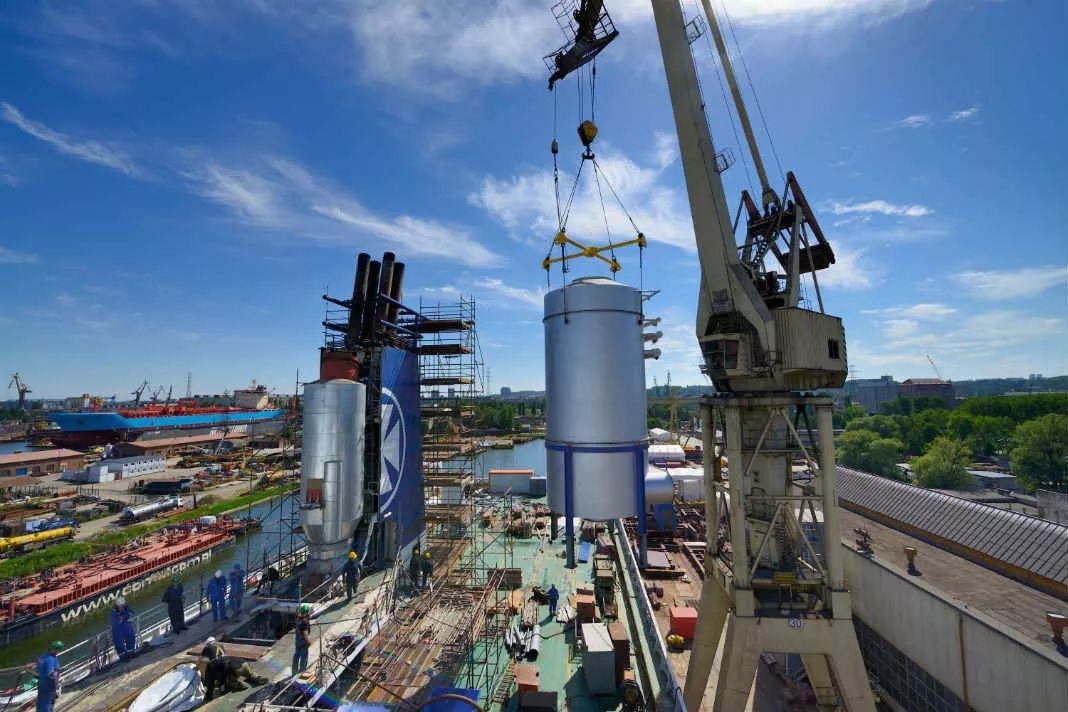
1. Current situation of various domestic parties
shipowner| The desulfurization tower can be said to be a new phenomenon that has attracted much attention in the shipping industry over the past two years; however, up to now,the vast majorityThe ship equipped with a desulfurization tower isNon-Chinese nationality.
Shipyard| Compared to the caution of domestic shipowners, the major domestic shipyards are currently quite busy, working intensively to install desulfurization towers on the "arriving one after another" ships. According to the Exhaust Gas Cleaning Systems Association (EGCSA), currentlyGlobal60%The desulfurization towers are all chosen to be installed at Asian shipyards.
equipment supplier| According to data from DNV GL classification society, the number of global desulfurization tower manufacturers has now increased to45domestically, the market share of desulfurization tower manufacturers accounts for about10%.
2. Before Installation
1
Should the ship be equipped? When should it be equipped?
In simple terms, what ships usually useThe more fuel, installing a scrubber canThe more costs are saved, the greater the savings., the ship thenThe more necessary it is to install.
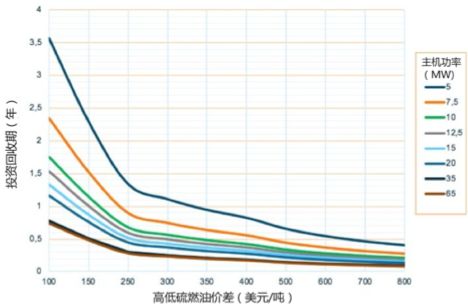
As can be seen from the above diagram,The greater the engine power, the more fuel the ship consumes, and the larger the price difference between high-sulfur and low-sulfur fuel.Due to the use of high-sulfur oilThe more costs are saved, the shorter the investment payback period, and the more necessary it is to install it on the ship..
In addition, the payback period of the desulfurization tower is also related to the ship'sOperating AreaAbout.
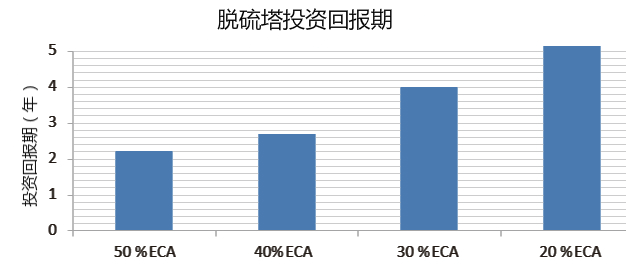
Shipat/in/onThe longer the operation time within the emission control area, the shorter the investment payback period for the desulfurization tower, and the ship will alsoThe more necessary it is to install.
In summary, the necessity of installing a desulfurization tower on ships is related in the following ways:
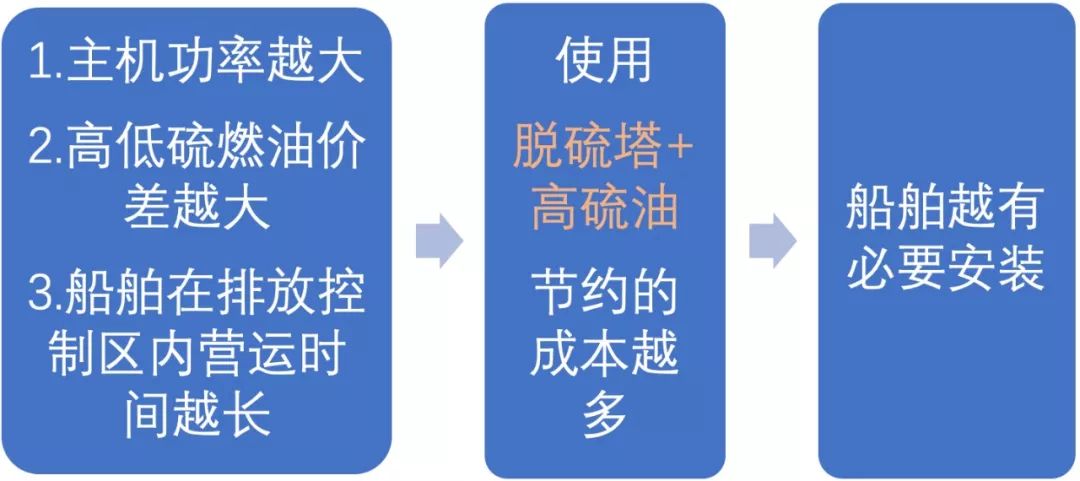
⏰ Regarding the timing of installation, for cost recovery reasons, most ships choose to install duringBefore 2020Proceed with the installation. However, consideringPort policies and the uncertainty of high and low sulfur fuel oil price differences around 2020, some ships may choose toAfter 2020Proceed with the installation.
2
How to choose the type?
The desulfurization tower is mainly divided intoOpen type,closedandHybridThree types, each with its own advantages and disadvantages.
❖Open desulfurization tower:
More suitable forSeawater area, using weakly alkaline seawater to neutralize and desulfurize ship exhaust containing sulfur oxides.The advantage is low cost and simple structure. The disadvantage is high energy consumption, and many countries and ports restrict its use.
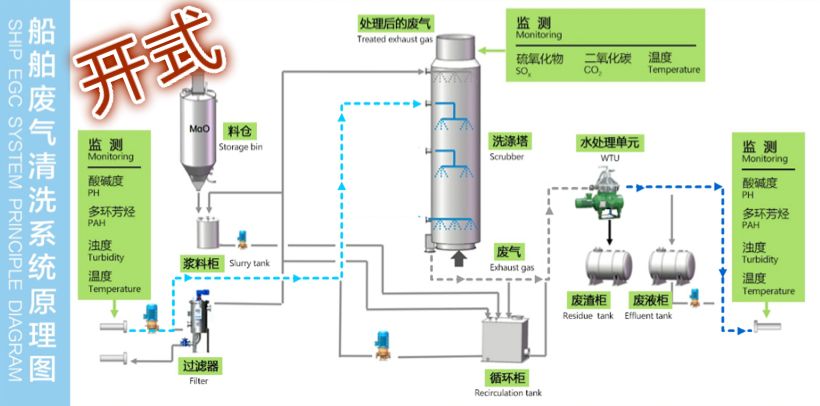
(Open-type desulfurization tower schematic)
❖ Closed Desulfurization Tower
More suitable forFreshwater and harbor waters, the wash water containing alkaline chemicals is used to neutralize and desulfurize ship exhaust containing sulfur oxides. The desulfurized wash water is discharged into the collection tank, waiting to be received by the shore or a third party.The advantage is that it is not affected by the alkalinity of seawater and does not pollute the ocean. The disadvantage is that the installation and operating costs are high.
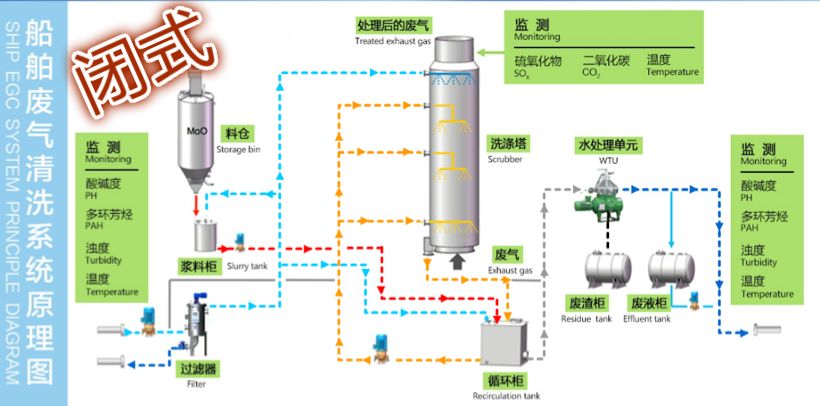
(Closed-type desulfurization tower schematic)
❖ Hybrid Desulfurization Tower
It is a combination of the above two.The advantage is that it can switch flexibly and complement each other's strengths. The disadvantage is that it is costly and the system is complex.
The shipowner can choose according to the characteristics of the three to meet the needs of the ship inDifferent Emission Control Areasnavigation requirements. Data from DNV·GL shows that among the currently installed desulfurization towers80%YesOpen desulfurization towerSecondly,Hybrid Desulfurization Tower, approximately accounting for18%.
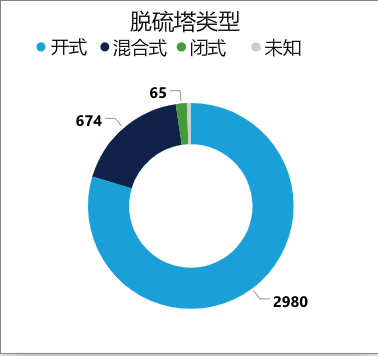
(Desulfurization Tower Installation Type)
From the perspective of the tower's structure, desulfurization towers are further divided intoType I, U-shape, single entrance, multiple entrancesVarious designs, each ship can be according to its ownCharacteristics of ship types and fuel-consuming equipmentMake a choice.
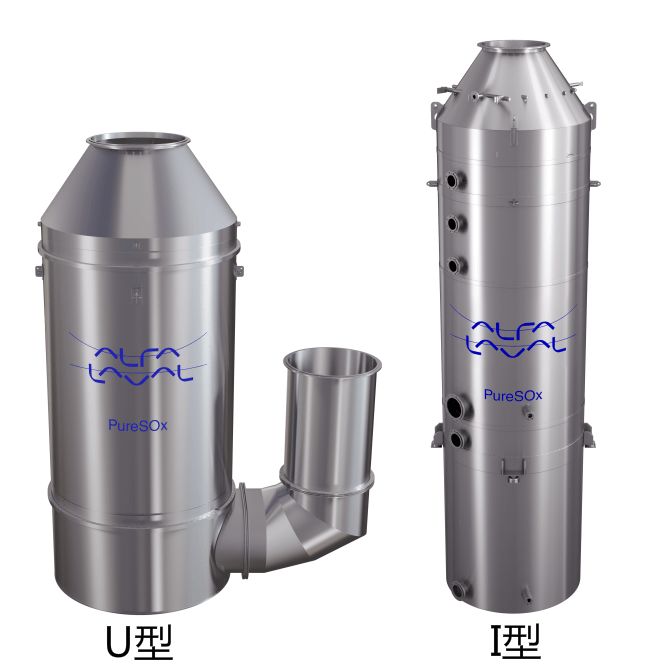
(U-shaped and I-shaped desulfurization towers)
3
Will open desulfurization towers pollute the ocean? Which ports have restrictions on them?
Regarding whether the wash water from open desulfurization towers will cause pollution to the marine environment, countries have been debating endlessly. For environmental protection and other purposes, some countries and ports have begun to impose restrictions on it.

"Harmful Theory"
✍ Swedish researchers tested wastewater from open-loop scrubbers, and the results showed untreated wastewater from open-loop scrubbersThe pollution is very serious, containingHeavy metals, aromatic carbon mixtures, and carbon black particlesand other substances.
✍ May 2019,A total of 28 EU countries jointly submitted a document to the IMO, stating that the use of open-loop scrubbers "may lead to the deterioration of the marine environment because the discharged wastewater containsToxic substances.

"Harmlessness Theory"
✍ Carnival Cruise Line conducted a study on the environmental impact of scrubbers for a period ofThree yearsThe research shows that the wastewater discharged from the washing towerMeets IMO standards, within the scope of the relevant regulations.
✍ The Ministry of Land, Infrastructure, Transport and Tourism of Japan (MLIT) has also conducted similar research, and the results proved that open-loop scrubbers during useNot at allCauses 'unacceptable' impacts on marine organic matter and seawater quality.
❖In May 2019, in response to the above discussions, IMO ultimately stated that it would continue to carry out an environmental risk assessment of wastewater from open-type desulfurization towers. Nevertheless, for environmental protection and political purposes,At present, many countries and regions have already decided to impose restrictions on open desulfurization towers..

(Countries and ports restricting the use of open desulfurization towers)
Note: For detailed regulations, please refer to Annex 1 of the CCS Circular on the Implementation Plan for the Inspection of Exhaust Gas Cleaning Systems (EGCS) on Ships.
☞ For areas where open-type desulfurization towers are prohibited, ships using open-type desulfurization towers canSwitch to low-sulfur oil, and ships using hybrid desulfurization towers canSwitch to closed modeto deal with it. Therefore, in any case,Keep a certain amount of low-sulfur oil on the shipVery necessary.
3. During installation
1
Specific installation process?
The IMO '2015 Guidelines for Exhaust Gas Cleaning Systems' has relatively detailed regulations on the installation of desulfurization towers.
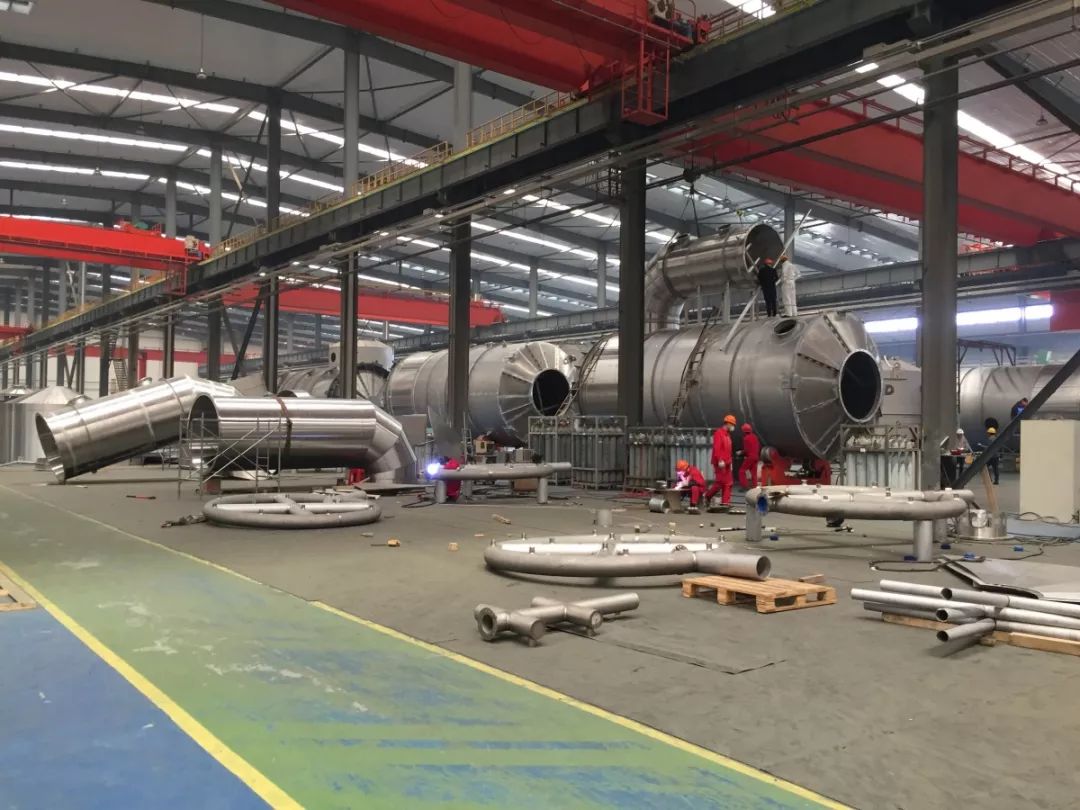
① Desulfurization tower assembly

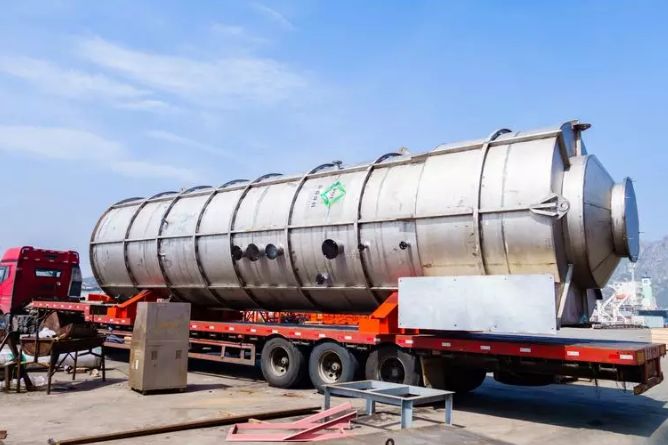
② Desulfurization Tower Transportation

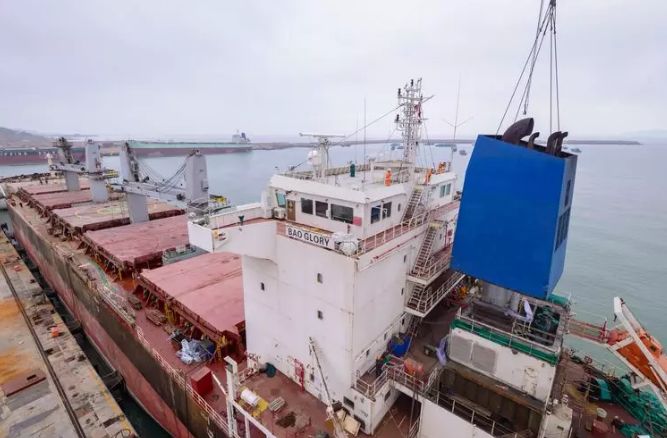
③ Demolition of old chimney
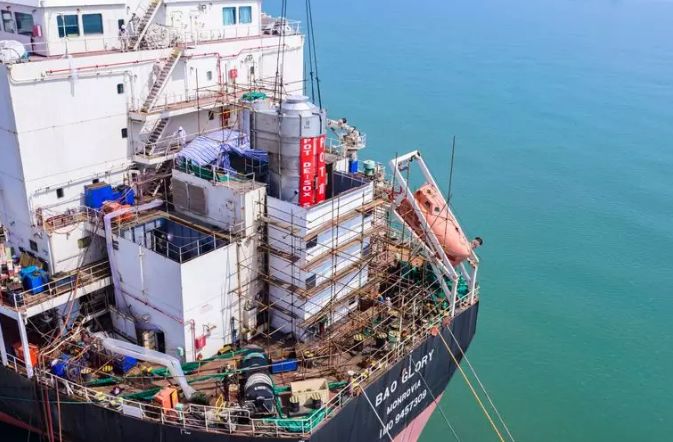
④ Desulfurization tower hoisting
2
How is a ship inspection conducted?
China Classification Society is in《2015 Exhaust Gas Scrubbing System Guidelines》Based on this, the 'Design and Installation Guide for Ship Exhaust Gas Cleaning Systems', 'Preset Guide for Ship Exhaust Gas Cleaning Systems', and 'Testing and Inspection Guide for Ship Exhaust Gas Cleaning Systems' were compiled.
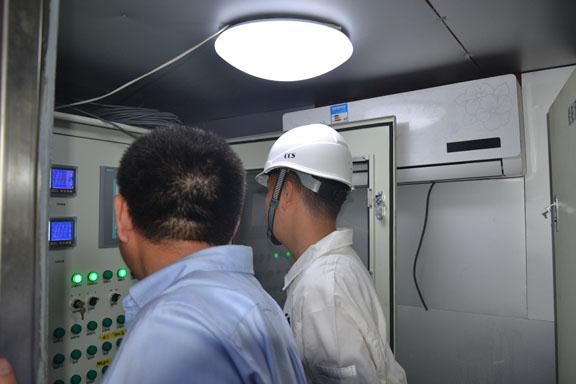
(Monitoring Device Inspection)

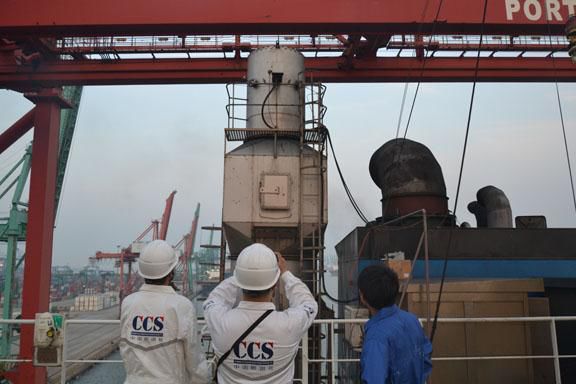
(Equipment Operation Inspection)
4. After Installation
1
How does the maritime authority supervise?
In May 2019, the IMO developed the 2019 MARPOL Annex VI Chapter 3 Port State Control Guidelines, providing guidance for maritime authorities on ship emission control. It includes requirements related to scrubbers.
In the initial examination:
❖PSCO should check the relevant certification documents — SECC (SOx Emission Compliance Certificate, if issued), ETM (Exhaust Gas Cleaning System Technical Manual), OMM (Onboard Monitoring Manual), SECP (SOx Emission Compliance Plan), and any installed exhaust gas cleaning systems (EGCS) or equivalent methods for reducing SOx emissions;
❖The required monitoring records of the EGCS need to be retained and kept in compliance.
❖The EGCS logbook must include nitrate discharge data and performance records, or an approved alternative method must be used to properly record them.
Upon detailed examination:
❖The PSCO should check whether its monitoring system has been installed and operated, and whether it complies with the relevant approvals according to the inspection procedures in the OMM.
❖As a marine equipment, PSCO can alsoAppearance of the desulfurization tower, control panel, main components, as well as alarm monitoring and control unitsWait for the examination.
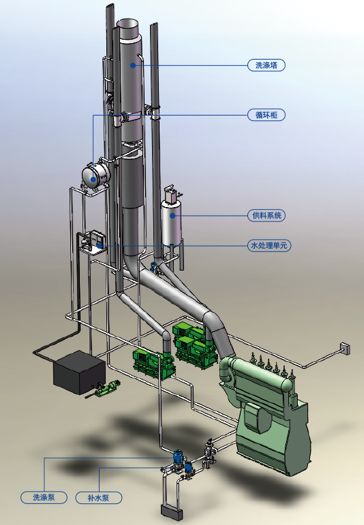
(Desulfurization tower structural diagram)
❖PSCO should verify that the system is functioning properly and is in operation. The system should be equipped with a continuous monitoring system to prevent tampering with data recording and processing. Inspections may include, but are not limited to: emission ratios, turbidity limits provided in pH, PAH, ETM-A or ETM-B, and operational parameters listed in system documentation.
2
What should be done if the desulfurization tower malfunctions?
In May 2019, IMO (International Maritime Organization) reviewed and approved a guide for responding to scrubber failures (MEPC.1/Circ.882), introducing the relevant requirements..
✍ A malfunction occurs in the washing tower installed on the ship. If it is a single monitoring instrument failure, it should be provided according to the EGCS guidelines.Alternative documents for proving compliance.
✍ If the EGCS unexpectedly shuts down and cannot be restarted within a short period (1 hour), the vessel experiencing the unexpected failure shouldSwitch to compliant fuel.
✍ When a vessel does not have compliant fuel or does not have enough compliant fuel on board, in order to refuel with compliant fuel or repair the EGCS, the relevant port authorities and competent authorities of the destination port shall be notified immediately.Seek their consent.
✍Any EGCS malfunction lasting more than 1 hour or occurring repeatedly shouldReport to the competent authority and the relevant destination portThe management authorities, including the efforts made by the ship operators to handle the malfunction. It is up to the competent authorities and the management authorities of the relevant destination port to decide whether to take action.